The Role and Responsibilities of a Chief Information Officer in a Corporate Company
Key Takeaways
A chief information officer is a C-suite executive who leads enterprise information technology strategy and operations, typically reporting to the chief executive officer or chief operating officer.
The CIO role has shifted from primarily managing IT infrastructure to driving corporate strategy, digital transformation, and data-driven decision-making across most organizations.
CIOs work closely with other executives, oversee cybersecurity and the IT budget, and typically bring 10+ years of IT and leadership experience to the executive position.
Core CIO responsibilities include developing IT strategy, managing infrastructure, ensuring cybersecurity oversight, and driving digital transformation initiatives.
The future CIO agenda centers on cybersecurity threats, cloud computing, AI integration, automation, and tighter alignment of technology with overall business strategy.
Corporate Business Blog Sponsored by VS News Network

What Is a Chief Information Officer?

A chief information officer is the senior executive responsible for an organization’s information technology systems, computer information systems, and enterprise technology strategy. This job title became common in large organizations during the 1980s, with the role first formally defined in 1981 by William R. Synnott, a senior vice president at Bank of Boston, alongside MIT professor William H. Gruber.
The CIO reports directly to the CEO or COO depending on company structure, and often holds a seat on the executive team or board in larger enterprises. This executive position places the information officer at the center of strategic discussions about how technology can support enterprise goals and enable business growth.
A CIO oversees the IT department, enterprise applications, data platforms, and technology investments across the organization. Day to day operations might be delegated to an IT director or IT manager, but the CIO sets the overall direction and ensures alignment with corporate objectives.
The modern chief information officer aligns technology initiatives with goals such as revenue growth, cost optimization, risk management, and improved customer experience. As businesses have become increasingly dependent on digital systems for operations and decision-making, the CIO position has evolved from managing computer systems and internal technology to serving as a true business leader shaping corporate strategy.

Core Responsibilities of a CIO

The CIO role encompasses a broad range of responsibilities spanning strategy, infrastructure, security, digital transformation, and people management. While specific duties vary by industry—whether finance, healthcare, manufacturing, or government—the strategic themes remain consistent across most organizations.
These responsibilities can be organized into four primary domains: developing IT strategy, managing IT infrastructure, cybersecurity oversight, and driving digital transformation. Each area requires the CIO to balance technical expertise with business acumen and leadership skills.





























Developing IT Strategy
CIOs create multi-year IT roadmaps that support the organization’s business plan and competitive positioning. This involves translating corporate goals—such as entering new markets or improving margins by a specific percentage—into concrete technology initiatives with clear timelines.
Key aspects of developing strategies include:
Planning for cloud adoption and migration timelines
Evaluating and prioritizing core system upgrades like ERP and CRM platforms
Building data platforms that enable analytics and reporting
Managing application portfolios to reduce technical debt
Forecasting feasibility, costs, and compatibility of new systems
The CIO owns or heavily influences the IT budget, prioritizing investments and measuring ROI across the technology portfolio. This requires balancing innovation spend against maintenance costs while ensuring new technologies deliver measurable business value.
CIOs participate in annual and quarterly strategic planning with other executives, using metrics and KPIs to demonstrate technology’s business impact. This collaboration with the chief financial officer, chief operating officer, and other c suite leaders ensures IT investments align with broader business processes and objectives.
Managing IT Infrastructure
CIOs are accountable for the reliability, performance, and cost efficiency of the organization’s foundational technology stack. This infrastructure forms the backbone of enterprise operations and directly impacts productivity across every department.
Typical infrastructure domains under the CIO include:
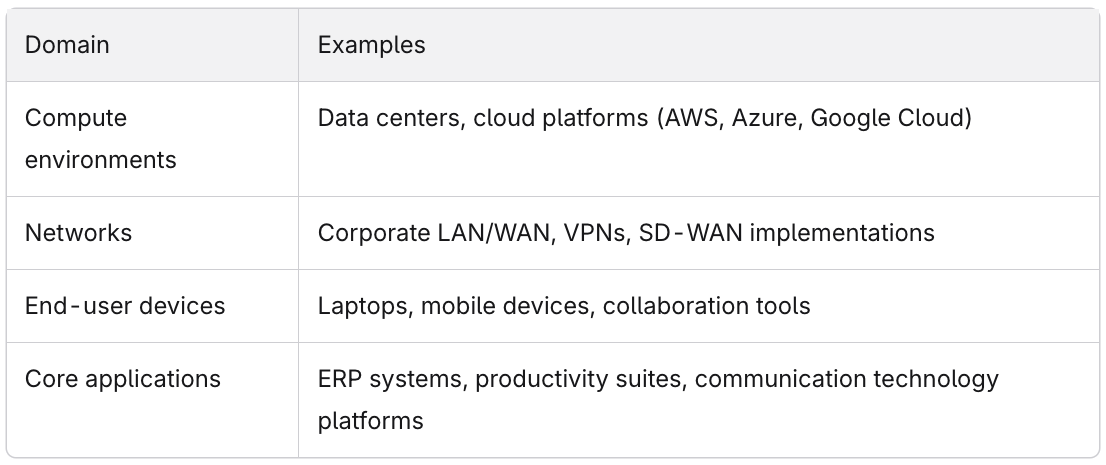
CIOs set service level expectations including uptime targets and response times, implementing IT management practices such as ITIL-based processes. While day to day operations are typically handled by IT directors or infrastructure managers, the CIO establishes standards, policies, and escalation paths.
Modern CIOs increasingly oversee hybrid environments that combine on-premises systems with public cloud platforms. This requires deep understanding of both traditional infrastructure and emerging cloud architectures to optimize performance and control costs.
Cybersecurity Oversight
Cybersecurity and data protection have become central to the CIO mandate as organizations face escalating cybersecurity threats. In some organizations, the CIO directly oversees security teams; in others, they collaborate closely with a Chief Information Security Officer (CISO) or chief data officer.
Specific cybersecurity responsibilities include:
Setting security policies and governance frameworks
Approving investments in tools such as SIEM, endpoint protection, and identity management
Implementing zero-trust architectures and access controls
Ensuring compliance with relevant regulations
Compliance requirements vary by sector. Healthcare organizations must address HIPAA requirements, while companies handling payment data need PCI DSS compliance. Organizations operating in Europe must navigate GDPR regulations for data privacy.
The CIO plays a critical role in incident response planning, cyber-resilience testing, and employee awareness training. Regular reporting to the board or audit committee on risk posture and security investments has become standard practice development for technology leaders.

Driving Digital Transformation
CIOs are now key leaders in digital transformation, using technology to reimagine products, services, and business processes. This extends beyond traditional IT management into areas that directly impact customer needs and competitive advantage.
CIOs sponsor initiatives such as:
Process automation using robotic process automation (RPA) in finance and operations
E-commerce platform upgrades and customer self-service portals
AI and machine learning pilots in forecasting and personalization
Integration of emerging technologies across the supply chain
Successful digital transformation requires CIOs to partner with business leaders in marketing, operations, and HR. This ensures new digital capabilities are adopted effectively and change management supports organization-wide success.
Measuring transformation outcomes is essential. CIOs track metrics like cost savings, cycle time reductions, customer satisfaction improvements, and innovation outcomes. These measurements inform adjustments to the roadmap and demonstrate value to the executive team.
CIO vs. CTO: What’s the Difference?

Both the chief information officer and chief technology officer are senior technology executives, but they focus on different domains within the organization.
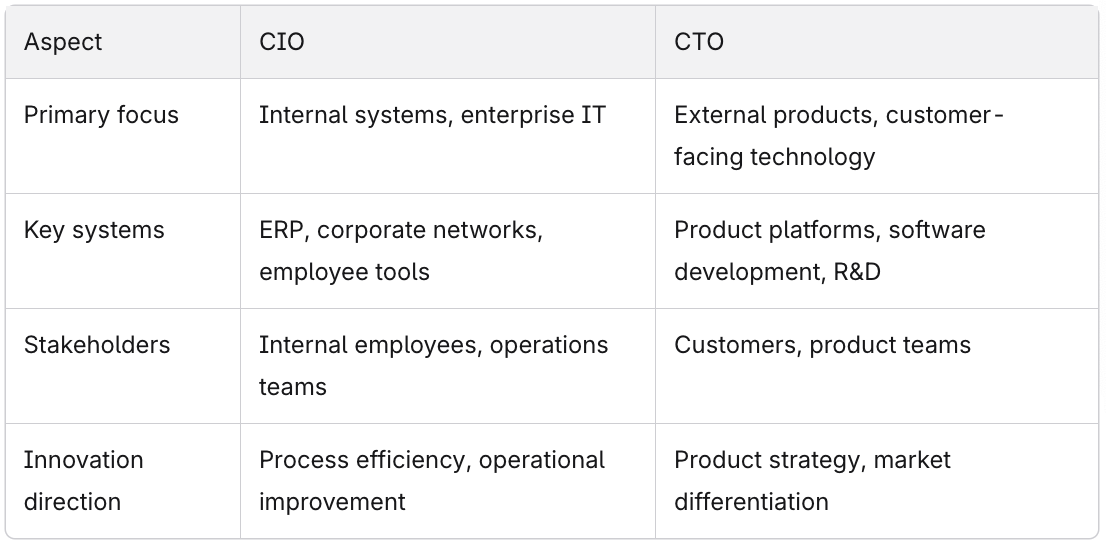
For example, a CIO might lead an ERP migration to modernize internal systems while the chief technology officer leads development of a new SaaS product for customers. The CIO ensures the company’s products and internal operations have the technology foundation they need, while the CTO focuses on external innovation.
In startups or smaller firms, one person may carry both CIO and CTO responsibilities. Titles can also vary significantly—some organizations use VP of Engineering, Head of Technology, or other designations for similar roles.
Effective collaboration between CIO and CTO improves innovation speed, reduces duplication of effort, and aligns product roadmaps with internal capabilities. In many organizations, these technology leaders work closely to ensure coherent technology strategy across internal and external initiatives.
Why the CIO Role Has Become More Strategic

Over the past two decades, the CIO position has shifted from back-office operations to front-line strategic leadership. What began as a role focused on technical projects and cost reduction has evolved into a position that shapes business strategy and competitive positioning.
Several factors have driven this transformation:
Widespread digitization has made technology central to almost every business initiative. Cloud computing, mobile devices, and SaaS applications have transformed how organizations operate, placing IT at the core of business execution rather than as a support function.
Data-driven decision-making has increased the CIO’s strategic importance. Advanced analytics, real-time reporting, and business intelligence capabilities now inform executive decisions across finance, marketing, operations, and product strategy.
Cybersecurity and regulatory requirements have elevated the CIO’s presence in boardroom discussions. As threats have escalated and compliance requirements have expanded, boards and executives rely on CIOs to manage these enterprise-wide risks.
Supply chain digitization has added another dimension to CIO responsibilities. Managing technology across partner ecosystems, integrating systems with suppliers and customers, and ensuring resilience across digital supply chains now fall under CIO purview.
CIOs also play key roles in mergers and acquisitions, participating in due diligence, integration planning, and evaluating the technical health of potential targets. This involvement in major corporate decisions reflects the business side importance of technology leadership.
Skills and Qualifications of a Chief Information Officer

CIOs need a blend of leadership, technical, strategic, and financial skills, typically built over 10-20 years of progressive experience. The educational background for most CIOs includes at least a bachelor’s degree in computer science, information systems, engineering, or a related field, with many also holding an MBA or master’s degree in IT management or business administration.
Core leadership capabilities include:
Building and motivating diverse IT teams across multiple disciplines
Communication skills for explaining complex topics to non-technical executives
Navigating organizational politics and building coalitions
Written communication skills for board presentations and policy documentation
Interpersonal skills for vendor and partner management
Technical domains CIOs should understand at a high level include cloud architectures, cybersecurity principles, enterprise software, data analytics, and software development methodologies. While CIOs don’t need to write code, they must evaluate technology trends and make informed decisions about technology investments.
Financial literacy is essential for the CIO role. This includes budgeting, cost-benefit analysis, vendor contracting, and understanding how technology investments impact P&L and cash flow. Working closely with the chief financial officer on investment cases requires sophisticated financial managerial skills.
Risk management and governance skills round out the CIO profile. Familiarity with frameworks like COBIT or ISO standards, experience with audit processes, and understanding of regulatory reviews are all important. Strong project management skills and experience leading major program implementations are highly preferred by most organizations seeking prospective CIOs.
The career path to CIO typically progresses through roles such as systems analyst, project manager, IT manager, IT director, and VP of IT. Candidates who gain management experience across multiple technology domains and demonstrate business acumen tend to advance most quickly.

The Future of the CIO Role

The CIO role will continue to evolve as organizations deepen their reliance on digital technologies through the late 2020s and beyond. Several trends are shaping the future agenda for IT leaders.
AI, machine learning, and automation will dominate CIO priorities. From intelligent operations and predictive maintenance to AI-enhanced customer experiences, CIOs will lead the integration of these new technologies across the enterprise. Labor statistics suggest continued strong demand for executives who can navigate this transformation.
Ecosystem partnerships will consume more CIO attention. Managing relationships with cloud providers, SaaS vendors, and strategic technology alliances requires sophisticated vendor management capabilities and the ability to orchestrate complex multi-vendor environments.
Collaboration with other C-suite roles will intensify. CIOs will work more closely with the CFO on technology investment cases, with the CHRO on digital workplace initiatives, and with operations leaders on process automation. This cross-functional collaboration positions the CIO to meet customer needs and drive business growth.
Cybersecurity, geopolitical risks, and data privacy will keep resilience and compliance at the center of the CIO agenda. As threats evolve and regulations expand, CIOs must balance innovation investments with protective measures that safeguard the enterprise.
The future CIO will be less of a technology specialist and more of a business leader who happens to lead technology. Those who can bridge the gap between the business side and technical execution will find expanding influence in corporate strategy and decision-making.
Conclusion

Chief information officers oversee enterprise technology across a wide spectrum—from infrastructure and security to digital innovation and analytics. The CIO role has shifted from primarily operational management to a strategic partnership in shaping business models, enabling business growth, and setting long-term corporate direction.
Organizations with strong CIO leadership are better equipped to manage risk, capture digital opportunities, and respond quickly to market changes. The technology leaders who succeed in this role combine technical skills with business acumen, strategic planning skills, and the soft skills needed to collaborate across the executive team.
As businesses continue their digital evolution, the importance of effective CIO leadership will only grow. Organizations that invest in this executive position—and give their CIO the resources and authority to drive transformation—position themselves to compete effectively in an increasingly digital and data-driven economy.
Frequently Asked Questions About Chief Information Officers

This FAQ section addresses practical questions about the CIO role not fully covered in the main article.
How long does it typically take to become a CIO?
Most CIOs reach the role after 10-20 years of progressive experience in IT, moving through positions such as systems analyst, project manager, IT manager, and director of IT. The journey requires building both technical expertise and leadership capabilities across multiple domains.
Accelerating factors can include advanced degrees, recognized certifications, and experience leading cross-functional transformation projects. Demonstrating business impact—not just technical competence—is essential for those pursuing the executive position.
Smaller organizations may promote into a CIO-equivalent role sooner than large global enterprises with more complex structures. Some mid-sized companies create CIO roles for candidates with 8-10 years of experience, while Fortune 500 companies often require 15+ years.
What is the difference between a CIO and an IT director?
An IT director usually focuses on operational management of teams and systems, while the CIO sets overall technology strategy and represents IT at the executive table. The CIO oversees enterprise-wide technology direction; the IT director executes within that framework.
In many companies, IT directors report to the CIO and are responsible for implementing the roadmap the CIO defines. For example, an IT director might oversee a data center migration that forms part of the CIO’s multi-year cloud strategy.
The CIO role requires more strategic planning skills, financial accountability, and executive communication. IT directors typically focus more on technical skills and operational excellence within their specific domain.
Do small businesses need a full-time CIO?
Very small organizations may rely on an IT manager, external consultants, or a virtual/fractional CIO instead of a full-time executive. The costs of a full-time c suite technology leader often exceed what smaller companies can justify.
A dedicated CIO becomes more important as a company scales beyond a few hundred employees or handles sensitive, regulated, or mission-critical data. At this point, the complexity of technology decisions and the strategic importance of IT typically warrant executive-level leadership.
Growing firms often start with part-time CIO advisory services before creating a permanent C-level role. This approach allows them to access strategic guidance while building the internal capabilities needed to support a full-time technology executive.
What are common career backgrounds for CIOs?
Many CIOs come from infrastructure, applications, or enterprise architecture roles, while others rise from data, cybersecurity, or consulting backgrounds. The diversity of paths reflects the breadth of the CIO role itself.
Successful candidates typically have experience managing large budgets, leading multi-year programs, and working closely with non-IT leaders. Project management experience on enterprise-scale initiatives is highly valued.
Cross-industry experience—such as moving from manufacturing to financial services—can broaden a CIO’s strategic perspective. Other executives and boards often value candidates who bring fresh thinking from different sectors while understanding the specific challenges of their industry.
How is CIO performance typically measured?
CIO performance measurement combines operational metrics with business-oriented outcomes. Common operational measures include:
System uptime and availability percentages
Project delivery on time and on budget
Cybersecurity incident rates and response times
IT spend as a percentage of revenue
Business-oriented measures include contribution to revenue growth, process efficiency gains, customer satisfaction improvements, and innovation outcomes. These metrics connect technology investments to enterprise goals.
Qualitative feedback from other executives, board members, and key business stakeholders also plays a major role in assessing CIO success. The ability to build trust, communicate effectively, and collaborate across the organization often matters as much as hitting technical targets.